Health & Medicine
Vaccine Safety & Efficacy: What the Data Actually Shows
The autism question, the rare real risks, and what the surveillance systems catch.
Health & Medicine
Is Ultra-Processed Food Bad for You?
Two feeding trials, the cohort studies of death and disease, and which kinds of ultra-processed food carry the clearest risk.
Health & Medicine
Social Media & Youth Mental Health
CDC survey data, meta-analyses, and where the evidence is thin.
Are Supplements Worth It, or a Waste of Money?
Fish oil, multivitamins, vitamin D and the rest, tested against the trials built to test them, with who each one is for and what the money buys.
Jump to the verdict ↓
What this covers
Supplements for a generally healthy adult in the United States. It does not give medical advice, and where a source says to ask a doctor or pharmacist, it says so.
The short answer
Worth it for a gap, not as insurance. For a healthy adult who is not short of anything the largest trials find little or no benefit; for a deficiency a blood test has found, the same shelf holds treatment.
Three jobs, and most pills are doing the third
Six in ten American adults take a dietary supplement. For most of them the trials predict nothing they could feel. There are three jobs a supplement can do.
It can correct a deficiency. Someone genuinely short of iron, B12 or vitamin D has a medical problem, and the pill treats it; people in that position often do feel the difference. It can lower a long-term risk, which nobody feels, the way a blood-pressure pill preventing a stroke in fifteen years produces no sensation today. Or it can top up someone who was not short of anything, which does little or nothing.
The supplements with strong evidence are doing one of the first two jobs for a named group. The ones sold to everybody are sold for the second and are usually doing the third.
What the trials find in people who are not deficient
Iron-deficiency anemia makes people tired, breathless and foggy, and treating it lifts that within weeks. The same pill in someone with normal iron does nothing except, sometimes, upset their stomach.
The US Preventive Services Task Force reviewed 84 studies of vitamins, minerals and multivitamins in adults without a known deficiency and concluded in 2022 that most had little or no effect on heart disease, cancer or death.
Supplement users are on average better off, better educated, eat better and smoke less than non-users, and in the analysis behind the figures below, the people taking nothing had the highest risk of deficiency. That pattern, the healthy-user effect, is why a survey finding that supplement takers live longer cannot credit the pills.
Personal experience is a poor instrument both ways: people start a supplement during a bad stretch and improve because bad stretches end. Feeling better after starting something is no evidence, and nor is feeling nothing.
How to read it: the first four bars are the share of Americans whose blood tests showed a deficiency in that nutrient: vitamin B6 10.5%, iron among women aged 12 to 49 9.5%, vitamin D 8.1%, vitamin C 6%. The last bar is a different measure from a different analysis of the same survey years: the share at risk of deficiency in at least one of eight measures (vitamins A, B6, B12, C, D, E, folate, or anemia), 31%. Sources: CDC, Second National Report on Biochemical Indicators of Diet and Nutrition; Bird et al., Nutrients 2017, funded by a supplement-ingredient maker.
Most people are short of nothing in particular; a substantial minority is short of something, more often women (37%), pregnant and breastfeeding women (47%) and non-Hispanic Black Americans (55%), and of the nutrients the CDC measured, the three most often missing were vitamin B6, iron and vitamin D.
What the fish-oil trials found
The claim that a daily capsule protects the heart has been tested in large trials, and at shop doses they found little or nothing.
VITAL gave 25,871 American adults with no heart disease or cancer a gram of fish oil a day (840 mg of EPA and DHA, the two active omega-3s) or a placebo, for a median of five years. Heart attacks, strokes and heart deaths combined hit 386 people on fish oil and 419 on placebo: an 8% difference, with a confidence interval from a 20% reduction to a 6% increase, so the trial could not tell the groups apart. Cancer was slightly more common on fish oil, 820 cases against 797. ASCEND did the same in Britain with 15,480 people with diabetes but no heart disease, over seven years: serious vascular events in 8.9% against 9.2%.
How to read it: each bar is the outcome on fish oil relative to placebo, as each study reported it, so 1.0 means no difference and 0.75 means a quarter fewer events. The first three sit close to 1.0: VITAL 0.92 and ASCEND 0.97, both a gram a day, and Cochrane’s pooled estimate for death from any cause, 0.97. Only the last, REDUCE-IT, at 0.75, 4 grams a day of a prescription EPA drug in patients already on statins with high triglycerides, is clearly below it. Sources: Manson et al. 2019; ASCEND 2018; Abdelhamid et al. 2020; Bhatt et al. 2019.
Cochrane pooled the trials in 2020. Death from any cause, from 45 trials and 143,693 people: risk ratio 0.97, confidence interval 0.93 to 1.01, rated high certainty, meaning the true effect is very likely close to it. Cardiovascular events: 0.96, also high certainty, little or no difference. Cardiovascular deaths: 0.92, moderate certainty, which Cochrane read as probably little or no difference. Still, more omega-3 may slightly reduce coronary heart disease deaths (0.90) and events (0.91), both on low-certainty evidence; to prevent one such event, Cochrane estimated, about 167 people would have to raise their omega-3 intake.
Among VITAL’s secondary outcomes, heart attacks alone were 28% lower (0.72), and in an extra analysis the trial had not set out to test, total coronary heart disease was 17% lower (0.83); both were nominally significant. The authors described the heart-attack result only as a possible benefit, and made no correction for the many things the trial measured, which is how such results can turn up by chance.
What it does do, and what REDUCE-IT showed
Fish oil lowers triglycerides, by about 15% on average, and prescription doses of 4 grams cut very high levels by 30% or more. That matters to people whose triglycerides are high.
REDUCE-IT gave 8,179 statin-treated patients with high triglycerides, most with existing heart disease, 4 grams a day of purified prescription EPA, and major events fell from 22.0% to 17.2%. It differs from a shop capsule in its dose, about thirteen times the EPA and DHA in a whole capsule, in being a regulated drug, and in treating sick patients. Its mineral-oil placebo raised the control group’s LDL cholesterol and inflammation markers, and the trial’s investigators call the effect of that on the result uncertain. STRENGTH gave 4 grams of a mixed product to 13,078 similar patients and found no benefit.
Read the back of the bottle, not the front
“1,000 mg fish oil” is the weight of the oil. EPA and DHA are listed on the back, and a typical capsule holds about 300 mg of them. The American Heart Association advises one or two servings of non-fried seafood a week, especially the oily kinds, and notes that two servings a week average out to roughly the 250 mg a day the 2015 US dietary guidelines were built on.
The other claims, and the risks
The other claims for fish oil are thinner, and the evidence on pregnancy is divided.
| Claim | What the trials found |
|---|---|
| Memory and thinking | Null in healthy older adults |
| Depression | A small effect at most, in people already diagnosed |
| Joint pain | Modest benefit in rheumatoid arthritis, mainly less need for anti-inflammatory drugs; a small effect in osteoarthritis, on low-quality evidence |
| Eyes | Nothing for macular degeneration; mixed for dry eye |
| Children and ADHD | No reliable benefit |
| Pregnancy | A 2018 Cochrane review found early preterm birth cut from 4.6% to 2.7%; a 2019 trial of 5,544 pregnancies found no benefit overall, 2.2% on omega-3 against 2.0% on placebo; a later, exploratory look at the same trial found a benefit only in women who began with low omega-3 levels, and more early preterm births among those who began with high ones |
The clear risk is atrial fibrillation, and it rises with the dose. Two 2021 meta-analyses of the large trials put the overall increase at about a quarter (ratios of 1.24 and 1.25), 4.0% of patients against 3.3% in the first. Split by dose, it was about 12% higher at a gram a day or less and about 50% higher above a gram, but these are relative increases on a small base. A 2026 analysis of 35 trials found a clear rise, of 0.8 percentage points, only above 1.5 grams a day in people at high heart risk. In REDUCE-IT, 3.1% of patients on the drug needed a hospital stay for atrial fibrillation or a closely related rhythm problem, against 2.1% on placebo, a rise of about one percentage point. In 2019 the FDA, reviewing bleeding, blood sugar and cholesterol, judged supplements of up to 5 grams a day of EPA and DHA safe. Cod liver oil also carries vitamins A and D, in amounts that vary by product, and both can be harmful in excess.
Download this conclusion: fish oil
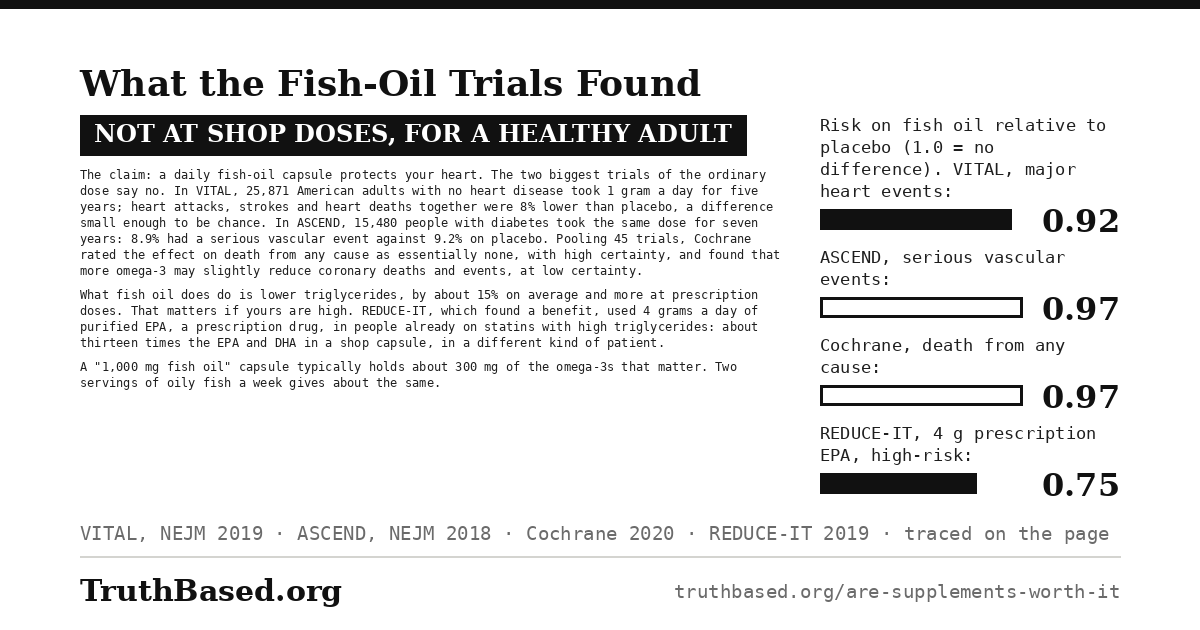
The fish-oil section as one image: fish oil against placebo in VITAL (0.92) and ASCEND (0.97), Cochrane’s estimate for death from any cause (0.97), REDUCE-IT’s 4 grams of a prescription drug (0.75) and why it does not transfer, and what a capsule contains.
What has happened to prices
There is no official shelf-price index for supplements; the consumer price index files vitamins and dietary supplements under medicinal drugs. A producer price index for vitamins, what manufacturers are paid at first sale, rose 7.7% between 2019 and 2024 while consumer prices generally rose 22.7%.
How to read it: both lines start at 100 in 2019, so each shows the rise by each later year, as annual averages. The lower line is what US manufacturers were paid (Bureau of Labor Statistics producer price index for other vitamins and nutrients): 100.7, 101.6, 103.3, 105.6, 107.7. The upper line is consumer prices for everything (CPI-U): 101.2, 106.0, 114.5, 119.2, 122.7. Sources: Bureau of Labor Statistics series WPU06380703 and CPI-U, via the St. Louis Fed’s FRED database.
Fish oil is the exception, because its raw material is fish. Peru did not open its first 2023 anchovy season, after survey fishing under El Niño found mostly juvenile fish, and the price of omega-3 oil rose through 2023 to a peak in early 2024; the first 2026 season was set 36% below 2025’s quota, at 1.9 million tonnes, then suspended in June and closed in August amid warm water and a catch of mostly juvenile fish. The squeeze on the raw material is real and continuing.
The April 2025 tariff orders exempted vitamins, amino acids and minerals from the start, along with a broad fatty-acid category that some omega-3 ingredients fall into, but not fish oil itself or botanicals such as turmeric and ashwagandha. Exempt or not, goods from China still paid an older tariff tied to fentanyl, 20% for most of 2025 and 10% from November. The Supreme Court struck both kinds down on 20 February 2026.
How long each one stays in the body
Consistency keeps a level steady but cannot create a benefit that is not there. What differs is how fast a level falls once you stop.
| Type | Does it build up? | After stopping |
|---|---|---|
| Vitamin C and most B vitamins | Barely; the excess leaves in urine | Levels fall once intake stops; deficiency only after weeks or months of low intake |
| Vitamin B12 | Yes, the liver stores years’ worth | Deficiency can take years to appear |
| Vitamins A, D, E and K | Yes, in fat and liver | Levels fall slowly; vitamin D in the blood has a half-life of about two weeks |
| Iron | Rebuilt over weeks to months | Treatment usually runs about three months past the point where blood counts recover, to refill stores |
Because vitamin D is stored, one randomized trial gave a single large dose each year: among 2,256 Australian women aged 70 and over, 500,000 units once a year produced 15% more falls and 26% more fractures than placebo, the extra falls concentrated, in an unplanned analysis, in the three months after each dose.
Cutting back, and where it is not safe
For a healthy adult taking things just in case, cutting back is safe.
A supplement has a case when a blood test showed a deficiency, a doctor recommended it, or the person is in one of the groups listed two sections down. Duplicates go first: a multivitamin, a separate vitamin D, a B-complex, a gummy and a fortified cereal together can deliver several times the intended B6 or vitamin A.
Cutting back lowers risk in four documented places. Vitamin A builds up, is toxic in excess and is dangerous in pregnancy. Sustained high vitamin D raises blood calcium and damages kidneys. Iron accumulates in people with hemochromatosis and poisons small children who find the bottle. And vitamin B6, which hides in B-complexes and some magnesium blends, damages nerves: after 250 reports of nerve damage, Australia’s regulator decided in November 2025 to move doses above 50 mg a day behind the pharmacy counter from June 2027 (above 200 mg already needed a prescription). Its own report notes cases at doses as low as 25 mg a day and after as little as two weeks, and says the risk cannot be excluded below 50 mg, which is the daily upper limit for adults in Australia. Separately, the National Institutes of Health’s LiverTox database lists turmeric and curcumin, green tea extract and ashwagandha among supplements with documented liver injury.
Do not stop without asking first if
It was prescribed for a diagnosed deficiency. You are pregnant, trying to conceive, or taking a prenatal, since folic acid before and during early pregnancy is one of the few supplements with a hard preventive result behind it. You have had weight-loss surgery or have a condition that limits absorption. You take warfarin, where a steady vitamin K intake matters more than a high or low one; St John’s wort, which interferes with many drugs including contraceptives; or long-term acid reducers such as omeprazole, which the FDA has warned can lower magnesium and which also lower B12 absorption. Or it is for a child.
Blood tests settle more than labels do, though not for vitamin D, where the Endocrine Society’s 2024 guideline advises against routine testing in healthy adults, because no trial has found a blood level worth aiming for to prevent disease, and against more than the recommended daily intake before 75, which is 600 units a day up to age 70 and 800 from 71.
What a supplement legally is
Under the 1994 Dietary Supplement Health and Education Act, a supplement is anything taken by mouth containing a vitamin, mineral, herb, amino acid, dietary substance that increases total intake, or an extract of those. The law has no category for hormones; melatonin, which is one, is sold in America as a supplement all the same.
“Natural” has no legal definition either; the FDA has only an informal policy that nothing artificial was added. Most vitamin C is synthesized, most B12 and vitamin D3 are made by fermentation or from lanolin, and synthetic vitamin C and vitamin C from fruit reach the blood the same way. The FDA’s own examples of a dangerous supplement are weight-loss pills sold as “all natural” that turned out to contain sibutramine, a prescription drug withdrawn from the market in 2010 for safety reasons.
And the FDA does not approve supplements before sale, for safety or for effectiveness, and generally does not review their labels first; the manufacturer is responsible for all three, and the FDA mostly acts afterwards, when it must prove a marketed product unsafe. A label may say a product “supports immune health”, but not that it treats a disease, and every such claim must carry the line that the FDA has not evaluated it.
Of 25 melatonin gummies bought online and tested for a 2023 study, 22 held an amount outside 10% of the label, from 74% to 347% of what was claimed; one held no melatonin and 31 mg of CBD. FDA warnings from 2007 to 2016 covered 776 supplements containing hidden, unapproved drug ingredients, almost all sold for sexual enhancement (45%), weight loss (41%) or muscle building (12%). A USP Verified or NSF mark means a lab checked that the contents match the label. It does not mean the product does anything.
Who has a reason to take one
A vegan taking iron is the everyday example of the right idea with the wrong nutrient. The one a vegan diet reliably cannot supply is vitamin B12, which occurs in useful amounts only in animal products, and the Academy of Nutrition and Dietetics, the American dietitians’ body, says vegans need a reliable source of it, meaning fortified food or a supplement. The deficiency builds silently and can damage nerves before it shows.
Iron is a test-first nutrient, and how common deficiency is depends on the definition: among American women aged 15 to 49 who were not pregnant, 10.4% by the body-iron model, 15.8% by a ferritin cutoff of 15, and 22.5% once inflammation was adjusted for. Heavy periods, pregnancy and frequent blood donation raise the risk, and so does eating no meat, poultry or fish. Symptoms come first, then a ferritin test, then iron.
| Who | What | Who says so |
|---|---|---|
| Anyone who could become pregnant | Folic acid, 400 to 800 micrograms a day, from at least a month before conception | US Preventive Services Task Force, reaffirmed 2023, its highest grade |
| Breastfed babies | Vitamin D drops | American Academy of Pediatrics |
| People on a vegan diet | Vitamin B12 | Academy of Nutrition and Dietetics |
| Adults over 50 | B12 mainly from fortified food or a supplement | National Academies |
| Children and adolescents, pregnant people, adults over 75, adults with high-risk prediabetes | Vitamin D above the standard recommended intake | Endocrine Society, 2024; conditional recommendations |
| People on long-term metformin | Periodic B12 checks | American Diabetes Association |
| After weight-loss surgery, or with a malabsorption condition | Individualized, lifelong monitoring and replacement | American Society for Metabolic and Bariatric Surgery (2016 update); for gut conditions, the treating specialist |
| Anyone with a diagnosed deficiency | The nutrient that is missing | This is treatment, not supplementation |
Skin colour belongs here too. Black Americans do have lower average blood levels of vitamin D: in the 2011 to 2014 national survey, 17.5% of non-Hispanic Black Americans were below the cutoff used in the deficiency chart, against 2.1% of non-Hispanic white Americans. But bone outcomes do not track those levels the way they should if the levels meant what they appear to, a puzzle tied to the protein that carries vitamin D in the blood, and the Endocrine Society declined in 2024 to recommend testing or higher doses on the basis of complexion.
Download this list: who should keep taking what
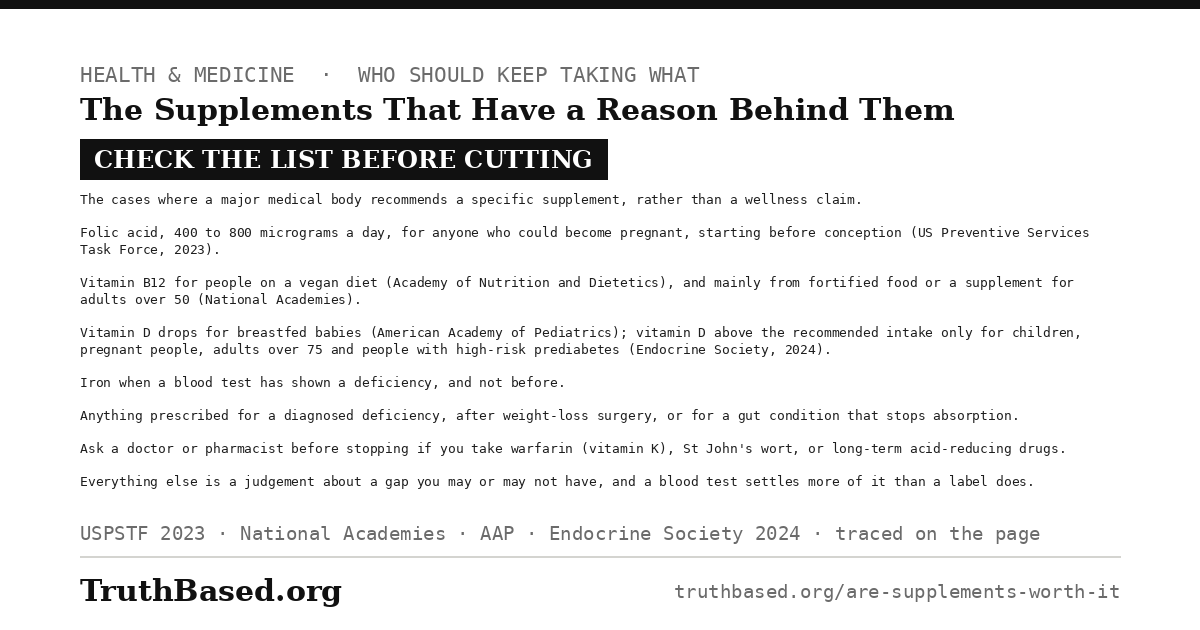
The recommendations with a named body behind them, as one image to keep, from folic acid at 400 to 800 micrograms a day to B12 for adults over 50 and vitamin D for adults over 75.
The common ones, one by one
For a healthy adult most of these do little or nothing; each is right for somebody.
| Supplement | What the trials found in healthy adults | Who has a reason |
|---|---|---|
| Multivitamin | In the COSMOS trial’s 21,442 older adults, over three and a half years, no reduction in cancer (0.97), cardiovascular disease (0.98) or death (0.93), though lung cancer alone was 38% lower (0.62), a secondary finding the other big multivitamin trial did not repeat. In the other, 14,641 male doctors over eleven years, no difference in cardiovascular events (1.01) and total cancer 8% lower (0.92), only just significant. On memory, 3,562 COSMOS participants recalled more at one year, the equivalent of 3.1 years of age-related memory change by the authors’ estimate, and on average over three; pooled with two other COSMOS studies, the benefit to overall thinking equalled about two years of ageing. | Restricted diets, malabsorption, pregnancy via a prenatal |
| Vitamin D | 2,000 units a day for five years in 25,871 adults: no change in cancer (0.96), cardiovascular events (0.97) or fractures. In a side study of the same trial, 22% fewer new autoimmune diseases, 123 cases against 155, a result that only just reached significance. | Diagnosed deficiency; breastfed infants; the four groups in the 2024 guideline |
| Vitamin C | Does not prevent colds: risk ratio 0.97 across the 10,708 people in general-community trials. Shortens them about 8% in adults, 14% in children. Halves them (0.48) only in the 598 people studied under extreme physical stress. No consistent effect once a cold starts. In 23,355 Swedish men followed for eleven years, the ones taking vitamin C tablets, typically 1,000 mg, developed kidney stones at about twice the rate of the ones taking no supplement; that is an association in a cohort study, not a trial. | Almost no fruit or vegetables in the diet |
| B12 and B-complex | No energy benefit unless deficient. B-complexes often carry B6, which Australia is restricting above 50 mg a day. | Vegans, adults over 50, long-term metformin or acid reducers, anyone with a low level |
| Iron | Treats iron deficiency and modestly reduces fatigue in deficient women who are not yet anemic. Nothing otherwise. | A ferritin test that says so; pregnancy under care |
| Calcium | The Task Force recommends against low-dose calcium with vitamin D (1,000 mg or less with 400 units or less a day) for fracture prevention in postmenopausal women, because the one large trial found no fewer fractures and slightly more kidney stones, and finds higher doses unproven. | A diet genuinely short of it, on a bone plan |
| Magnesium | Thin evidence for sleep and anxiety; mostly null for night cramps. It does work as a laxative, which is also its main side effect. | Documented deficiency, gut losses, long-term acid reducers |
| Zinc | Lozenges started within a day may shorten a cold in some trials. Year-round high doses can cause copper deficiency; in 2009 the FDA told people to stop using three Zicam nasal gels and swabs after more than 130 reports of lost sense of smell. | Documented deficiency or a restricted diet |
| Melatonin | Helps with timing problems and jet lag, modestly with falling asleep; not a treatment for chronic insomnia. Poison-centre calls for children and teenagers swallowing it rose 530% from 2012 to 2021, 8,337 to 52,563, a rise driven mostly by children aged five and under getting into it by accident. Over the decade more than 4,000 were admitted to hospital, most of them teenagers who had taken it on purpose, and two children died. | Jet lag, a delayed body clock |
| Biotin | No good evidence for hair or nails without a deficiency. It interferes with lab tests, including the troponin test used to diagnose heart attacks, and the FDA has warned this can produce a falsely low result that hides a heart attack; one such death was reported to it. | Confirmed deficiency; tell a doctor before any blood test |
| Protein powder and creatine | Protein powder is a convenient way to get protein that whole food can also supply. Creatine reliably improves short intense effort and adds to strength gained from training; it has not been shown to harm healthy kidneys. | People who cannot hit a protein target; people who train hard |
| Folic acid and prenatals | Taken before conception and through early pregnancy, it reduces neural tube defects, strongly enough that flour is fortified with it. | Anyone who could become pregnant |
The harms, the spending and the gap
For most of what most people take, the spending buys little or nothing. Three trials, each randomized against a placebo, found that supplements can do harm. In Finland, 29,133 male smokers given beta-carotene developed 18% more lung cancers and died 8% more often. In the United States, 18,314 smokers and asbestos workers given beta-carotene with vitamin A developed 28% more lung cancers and the trial was stopped. In 34,887 healthy men, 400 units a day of vitamin E raised prostate cancer 17%, an extra 1.6 cases per 1,000 men a year.
The US Preventive Services Task Force recommends against beta-carotene, citing the two lung-cancer trials, and against vitamin E, finding no net benefit; they are the only two supplements it tells people not to take to prevent heart disease or cancer. On multivitamins it finds the evidence insufficient either way. Six in ten American adults take a supplement anyway, 60.2% in the CDC’s latest survey, up from 53.8% in 2013 to 2014.
How to read it: each bar is the share of US adults who took any supplement in the past month, by round of the CDC’s national health survey: 53.8% (2013 to 2014), 55.9% (2015 to 2016), 58.5% (2017 to March 2020), 60.2% (August 2021 to August 2023). The rise is steady and statistically significant. Source: NCHS Data Brief 561, 2026.
Set that against the deficiency figures: about one in ten or fewer short of any given nutrient, three in ten short of something. Most of the sixty percent are buying the third job, the top-up that does little or nothing.
A supplement turns from waste to necessity with a blood test that came back low, a pregnancy, a prescription, or a diet with a real hole in it. So neither the money question nor the health question is answered by “do supplements work”; they are answered by what this one is for, and whether you are the person it is for.
The verdict: what the evidence shows
Worth it for a gap, not as insurance. For a healthy adult who is not short of anything, the largest trials find little or no benefit from a multivitamin, vitamin D, vitamin C or ordinary fish oil, and two nutrients tested this way caused harm. For someone with a deficiency a blood test has found, anyone who could become pregnant, a vegan or a breastfed baby, the same shelf holds treatment.
Six common claims, against the evidence
Claim“If a supplement worked, you would feel it.”
FalseA vitamin or mineral is felt only when it corrects a deficiency. For a healthy adult who was not short of anything, the trials predict little or nothing to notice or measure.
Claim“Supplements have got a lot more expensive.”
PartlyVitamin producer prices rose 7.7% from 2019 to 2024 against 22.7% for consumer prices generally. Fish oil is the exception, with a real supply squeeze since Peru did not open its 2023 anchovy season. The April 2025 tariffs exempted vitamins, amino acids and minerals from the start, though not fish oil itself, and were struck down in February 2026.
Claim“Once you start, it is risky to stop.”
False, with a short list of exceptionsAnything without a diagnosed deficiency or a named recommendation behind it can go. Do not stop a prescribed treatment, folic acid or a prenatal, St John’s wort, or anything taken with warfarin or long-term acid reducers, without asking.
Claim“Fish oil is good for your heart.”
Little or nothing at shop dosesAt shop doses, two large trials (25,871 adults without heart disease or cancer; 15,480 people with diabetes) found no reduction in heart events (0.92 and 0.97 against placebo). Pooling trials of all doses, Cochrane found little or no difference in death from any cause (0.97), though more omega-3 may slightly reduce coronary deaths and events, on low-certainty evidence. It lowers triglycerides, which matters when they are high. REDUCE-IT, which found a benefit, used 4 grams of a prescription EPA drug, mostly in heart patients.
Claim“Supplements are natural pills that help you nutritionally, like iron for a vegan.”
PartlyThe legal category covers synthetic vitamins, herbs and amino acids, needs no FDA approval and has no definition of “natural”; melatonin, a hormone, is sold under it all the same. The vegan’s reliable gap is B12, not iron; iron is a test-first nutrient.
Claim“You have to take them constantly for them to work.”
Half rightDaily use keeps a level steady; it cannot create a benefit that is not there. For a healthy adult without a tested gap, most of the spending buys little or nothing. For a real gap, a pregnancy or a prescription, the same pills are treatment, not waste.
Download the conclusion
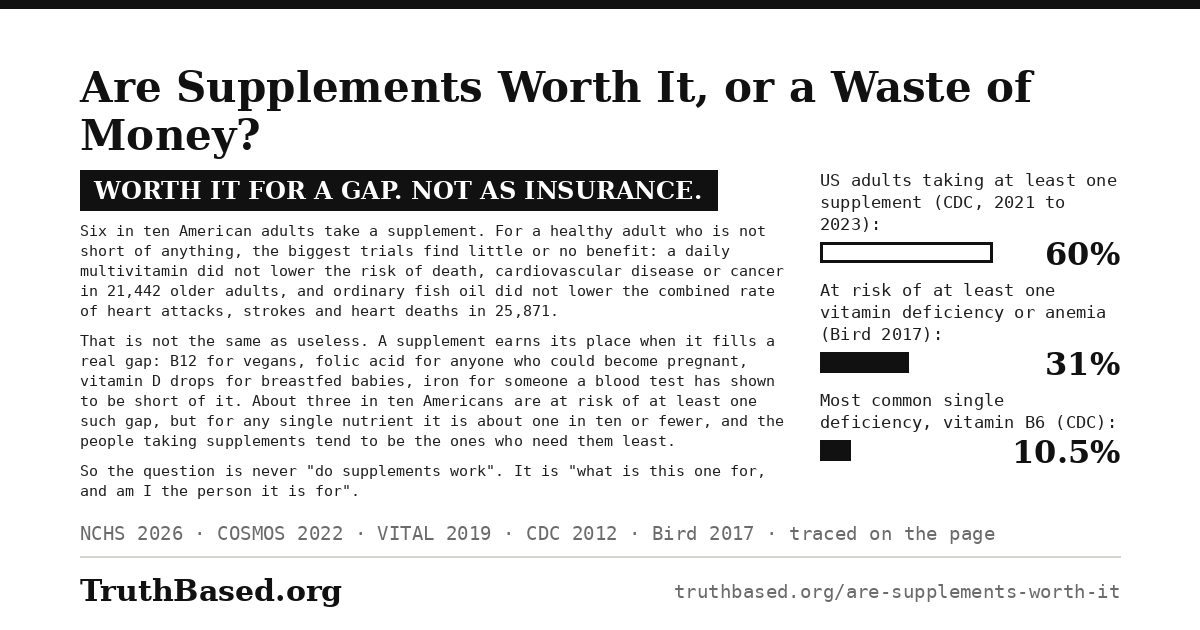
The verdict above as one image, with the three numbers that frame it: 60% of American adults take a supplement, 31% of Americans are at risk of at least one vitamin deficiency or anemia, and the most common single deficiency, vitamin B6, affects 10.5%. It is 1,200 by 630 pixels, the size social networks use for link previews, and anyone may download it and post it.
What would change this conclusion
For fish oil: a large randomized trial of an ordinary dose in healthy adults that found fewer heart attacks or deaths, or VITAL’s secondary heart-attack result replicated as a primary outcome. For multivitamins: a randomized trial, not a cohort, showing lower mortality or heart disease in well-nourished adults; the COSMOS follow-up on memory is the one to watch. For vitamin D: a trial that found a blood level at which treating healthy adults improved a hard outcome, which is what the Endocrine Society said in 2024 it could not find. For prices: a traced pass-through of tariffs or of the anchovy shortfall to the shelf price of a specific product.
Sources
Manson J.E. et al. (2019) — Marine n−3 Fatty Acids and Prevention of Cardiovascular Disease and Cancer. New England Journal of Medicine 380:23–32 (VITAL). 25,871 adults, median 5.3 years, 1 g/day containing 460 mg EPA and 380 mg DHA; major cardiovascular events 386 against 419, hazard ratio 0.92 (95% CI 0.80–1.06, P=0.24); invasive cancer 820 against 797, 1.03 (0.93–1.13); death from any cause 1.02 (0.90–1.15). Secondary outcomes: total myocardial infarction 0.72 (0.59–0.90), total stroke 1.04 (0.83–1.31), death from cardiovascular causes 0.96 (0.76–1.21); among the additional end points the trial had not set out to test, total coronary heart disease 0.83 (0.71–0.97). The authors describe the heart-attack result as a possible benefit and made no adjustment for the many outcomes measured. doi.org
ASCEND Study Collaborative Group (2018) — Effects of n−3 Fatty Acid Supplements in Diabetes Mellitus. New England Journal of Medicine 379:1540–1550. 15,480 adults with diabetes, mean 7.4 years, 1 g/day against an olive-oil placebo; serious vascular events 689 (8.9%) against 712 (9.2%), rate ratio 0.97 (0.87–1.08, P=0.55); death from any cause 0.95 (0.86–1.05). doi.org
Abdelhamid A.S. et al. (2020) — Omega-3 fatty acids for the primary and secondary prevention of cardiovascular disease. Cochrane Database of Systematic Reviews CD003177.pub5. 86 trials and 162,796 people in all, at doses from 0.5 g to more than 5 g a day. All-cause mortality risk ratio 0.97 (0.93–1.01), 11,297 deaths in 45 trials and 143,693 people, high certainty; cardiovascular events 0.96 (0.92–1.01), high certainty; cardiovascular mortality 0.92 (0.86–0.99), moderate certainty; coronary heart disease events 0.91 (0.85–0.97), low certainty, number needed to treat 167; coronary heart disease mortality 0.90 (0.81–1.00), low certainty, number needed to treat 334; triglycerides about 15% lower, an average across those doses. doi.org
Bhatt D.L. et al. (2019) — Cardiovascular Risk Reduction with Icosapent Ethyl for Hypertriglyceridemia. New England Journal of Medicine 380:11–22 (REDUCE-IT). 8,179 statin-treated patients with raised triglycerides, 70.7% of them with established cardiovascular disease and 29.3% with diabetes and another risk factor, on 4 g/day purified EPA (icosapent ethyl, sold as Vascepa) for a median 4.9 years; primary events 17.2% against 22.0%, hazard ratio 0.75 (0.68–0.83); hospital stays for atrial fibrillation or flutter 3.1% against 2.1%. The mineral-oil placebo raised the control group’s LDL cholesterol and inflammatory markers; Ridker P.M. et al. (2022), Circulation 146:372–379, doi 10.1161/CIRCULATIONAHA.122.059410, conclude that the effect of this on the trial’s result is uncertain. The Vascepa label (revised March 2026) gives a placebo-adjusted triglyceride reduction of 33% in people starting at 500 mg/dL or more; the American Heart Association’s 2019 science advisory (Skulas-Ray A.C. et al., Circulation 140:e673–e691) puts the reduction from 4 g a day of EPA and DHA at 30% or more when triglycerides are that high. doi.org
Nicholls S.J. et al. (2020) — Effect of High-Dose Omega-3 Fatty Acids vs Corn Oil on Major Adverse Cardiovascular Events. JAMA 324(22):2268–2280 (STRENGTH). 13,078 high-risk patients on 4 g/day mixed EPA and DHA; stopped early for futility. doi.org
Sesso H.D. et al. (2022) — Multivitamins in the prevention of cancer and cardiovascular disease: COSMOS. American Journal of Clinical Nutrition 115(6):1501–1510. 21,442 adults, median 3.6 years; invasive cancer 518 against 535, hazard ratio 0.97 (0.86–1.09); composite cardiovascular disease 429 against 437, 0.98 (0.86–1.12); all-cause mortality 0.93 (0.81–1.08); lung cancer 0.62 (0.42–0.92), a secondary site-specific outcome that, the authors note, the Physicians’ Health Study II did not find. doi.org
Gaziano J.M. et al. (2012) — Multivitamins in the Prevention of Cancer in Men: Physicians’ Health Study II. JAMA 308(18):1871–1880; and Sesso H.D. et al. (2012), the cardiovascular report. 14,641 male physicians, median 11.2 years; total cancer 17.0 against 18.3 per 1,000 person-years, hazard ratio 0.92 (0.86–0.998, P=0.04); major cardiovascular events 11.0 against 10.8 per 1,000 person-years, 1.01 (0.91–1.10). doi.org
Yeung L.K. et al. (2023) — Multivitamin supplementation improves memory in older adults: a randomized clinical trial (COSMOS-Web). American Journal of Clinical Nutrition 118(1):273–282; and Vyas C.M. et al. (2024), the pooled analysis of three COSMOS cognition studies, American Journal of Clinical Nutrition 119(3):692–701. 3,562 older adults, average age 71; better immediate recall on the ModRey test at the prespecified one-year point (P=0.025), which the authors likened to 3.1 years of age-related memory change, and on average across three years (P=0.011), though the differences at two and three years taken singly were not significant. Vyas: COSMOS-Clinic (573 participants), COSMOS-Mind (2,158) and COSMOS-Web (2,472) pooled showed benefits on global cognition and on episodic memory, the global effect equal to about two years of cognitive ageing. pubmed.ncbi.nlm.nih.gov
Manson J.E. et al. (2019) — Vitamin D Supplements and Prevention of Cancer and Cardiovascular Disease. New England Journal of Medicine (VITAL vitamin D arm); LeBoff M.S. et al. (2022), the fracture report; Hahn J. et al. (2022), BMJ, the autoimmune ancillary study. Cancer 0.96 (0.88–1.06); major cardiovascular events 0.97 (0.85–1.12); no reduction in fractures; confirmed autoimmune disease, the primary outcome of that ancillary study, 123 against 155, 0.78 (0.61–0.99, P=0.05, right at the boundary of significance); the omega-3 arm of the same trial, 130 against 148, 0.85 (0.67–1.08), not significant. doi.org
Demay M.B. et al. (2024) — Vitamin D for the Prevention of Disease: an Endocrine Society Clinical Practice Guideline. Journal of Clinical Endocrinology & Metabolism 109:1907–1947. Suggests against vitamin D above the Dietary Reference Intake for disease prevention in healthy adults under 75, and against routine 25-hydroxyvitamin D testing in healthy people. doi.org
US Preventive Services Task Force (2022) — Vitamin, Mineral, and Multivitamin Supplementation to Prevent Cardiovascular Disease and Cancer. JAMA 327(23):2326–2333, with its evidence report (O’Connor et al., JAMA 327:2334–2347). Recommends against beta-carotene and vitamin E (grade D, with moderate certainty that beta-carotene’s harms outweigh its benefits and that vitamin E has no net benefit); insufficient evidence for multivitamins and for other single or paired nutrients (grade I); the review covered 84 studies. The statement applies to community-dwelling, non-pregnant adults and explicitly does not apply to children, people who are pregnant or may become pregnant, people who are chronically ill or hospitalised, or anyone with a known nutritional deficiency. uspreventiveservicestaskforce.org
USPSTF (2023) — Folic Acid Supplementation to Prevent Neural Tube Defects: Reaffirmation Recommendation Statement. JAMA 330(5):454–459, 1 August 2023. Grade A: 0.4 to 0.8 mg daily for all persons planning or capable of pregnancy, starting at least a month before conception and continuing through the first two to three months of pregnancy. The CDC records that since 1998 the United States has required enriched cereal grain products to be fortified with 140 micrograms of folic acid per 100 grams (MMWR 64(1), 2015). uspreventiveservicestaskforce.org cdc.gov
The Alpha-Tocopherol, Beta-Carotene Cancer Prevention Study Group (1994), NEJM; Omenn G.S. et al. (1996), NEJM (CARET); Klein E.A. et al. (2011), JAMA (SELECT). Beta-carotene raised lung cancer 18% in 29,133 male smokers and total mortality 8%; beta-carotene with retinol raised lung cancer 28% in 18,314 smokers and asbestos workers; vitamin E raised prostate cancer 17% in 34,887 healthy men, an excess of 1.6 cases per 1,000 person-years. doi.org doi.org doi.org
Hemilä H. & Chalker E. (2013) — Vitamin C for preventing and treating the common cold. Cochrane Database of Systematic Reviews CD000980.pub4. 29 trial comparisons, 11,306 participants, contributed to the incidence analysis; within that, the general-community trials (10,708 participants) gave a pooled risk ratio of 0.97 (0.94–1.00) and five trials of marathon runners, skiers and subarctic soldiers (598 participants) gave 0.48 (0.35–0.64). Duration, from 31 comparisons and 9,745 episodes: 8% shorter in adults (3–12%), 14% in children (7–21%). Seven comparisons of vitamin C started after symptoms began showed no consistent effect. pubmed.ncbi.nlm.nih.gov
Thomas L.D.K. et al. (2013) — Ascorbic acid supplements and kidney stone incidence among men. JAMA Internal Medicine 173(5):386–388. 23,355 Swedish men followed for eleven years, 436 kidney stones; twice the risk among users of ascorbic-acid-only supplements against men taking no supplements; doses were not recorded (Swedish tablets are typically 1,000 mg); an observational cohort, not a trial. news.ki.se
Sanders K.M. et al. (2010) — Annual high-dose oral vitamin D and falls and fractures in older women. JAMA 303(18):1815–1822. 2,256 community-dwelling women aged 70 and over at high risk of fracture in southern Victoria, Australia, dosed each autumn or winter for three to five years with 500,000 IU of cholecalciferol or placebo; 15% more falls (83.4 against 72.7 per 100 person-years, rate ratio 1.15, 1.02–1.30) and 26% more fractures (171 fractures in 155 women against 135 in 125; rate ratio 1.26, 1.00–1.59). In a post hoc analysis the excess falls were concentrated in the three months after each dose (rate ratio 1.31, against 1.13 over the following nine months), and fractures showed the same pattern without reaching significance. The authors note this was the largest annual dose reported in any large randomized trial. doi.org
Jia X. et al. (2021) — Association Between Omega-3 Fatty Acid Treatment and Atrial Fibrillation in Cardiovascular Outcome Trials. Cardiovascular Drugs and Therapy 35(4):793–800; Gencer B. et al. (2021), Circulation 144:1981–1990; and Abuknesha N.R. et al. (2026) — Effects of Omega-3 Fatty Acid Treatment on Risk for Atrial Fibrillation: An Updated Meta-Analysis of 35 Trials including 114,592 Individuals. Circulation: Arrhythmia and Electrophysiology, 28 July 2026, doi 10.1161/CIRCEP.125.014785. Jia: 8 trials, 83,112 participants, atrial fibrillation in 4.0% against 3.3%, risk ratio 1.24 (1.11–1.38), P=0.0002; 1.12 (1.04–1.21) at a gram a day or less and 1.51 (1.26–1.80) above. Gencer: 7 trials, more than 81,000 participants, overall hazard ratio 1.25 (1.07–1.46), 1.12 (1.03–1.22) at a gram a day or less and 1.49 (1.04–2.15) above, with a meta-regression of 1.11 per additional gram a day. The 2026 analysis found a clear increase only for high doses in high-risk patients, pooled odds ratio 1.43, an absolute difference of 0.8 percentage points, and no significant rise in its other three dose-and-risk groups; its senior author’s institute is the Fatty Acid Research Institute, an omega-3 research body. doi.org
Middleton P. et al. (2018) — Omega-3 fatty acid addition during pregnancy. Cochrane Database of Systematic Reviews CD003402.pub3; Makrides M. et al. (2019), NEJM 381:1035–1045 (ORIP). Cochrane: 70 trials, 19,927 women; birth before 34 weeks down 42%, from 46 to 27 per 1,000 (4.6% to 2.7%), risk ratio 0.58 (0.44–0.77), high certainty; birth before 37 weeks down 11%, from 134 to 119 per 1,000. ORIP, 5,544 pregnancies in 5,517 women: 2.2% against 2.0%, no overall difference. Simmonds L.A. et al. (2020), BJOG 127(8):975–981, an exploratory analysis of ORIP: fewer early preterm births on supplements among women who began with low omega-3 status (0.73% against 3.16%, risk ratio 0.23) and more among women who began with high status (2.20% against 0.97%, risk ratio 2.27, 1.13–4.58). cochrane.org
Cohen P.A. et al. (2023) — Quantity of Melatonin and CBD in Melatonin Gummies Sold in the US. JAMA 329(16):1401–1402. 25 products identified in September 2022 and bought online (the paper gives no test date); 22 (88%) outside 10% of the labelled amount, measured content 74% to 347% of label, one product with no melatonin and 31.3 mg of CBD; no serotonin was detected in any product. doi.org
Lelak K. et al. (2022) — Pediatric Melatonin Ingestions. MMWR 71(22). Calls to US poison centres for children and teenagers (19 and under) swallowing melatonin rose 530%, from 8,337 in 2012 to 52,563 in 2021, 260,435 over the decade, a rise driven largely by accidental ingestions by children aged five and under; of those treated at a hospital, 4,097 were admitted, most of them teenagers who had taken it deliberately, 287 needed intensive care; two children, both under two, died at home. cdc.gov
Tucker J. et al. (2018) — Unapproved Pharmaceutical Ingredients Included in Dietary Supplements Associated With US FDA Warnings. JAMA Network Open 1(6):e183337, doi 10.1001/jamanetworkopen.2018.3337. 776 products from 2007 to 2016 containing undeclared, unapproved pharmaceutical ingredients, the paper’s term; 353 (45.5%) sold for sexual enhancement, 317 (40.9%) for weight loss, 92 (11.9%) for muscle building.
Bird J.K. et al. (2017) — Risk of Deficiency in Multiple Concurrent Micronutrients in Children and Adults in the United States. Nutrients 9(7):655; and CDC, Second National Report on Biochemical Indicators of Diet and Nutrition. 31% of Americans aged 9 and over at risk of at least one vitamin deficiency or anemia (women 37%, non-Hispanic Black participants 55%, pregnant or breastfeeding women 47%); the CDC report’s executive summary charts B6 10.5% (ages 1 and over), iron among women 12–49 9.5%, vitamin D 8.1%, vitamin C 6%, iron among children aged 1 to 5 6.7%, and 2% or less for vitamins A, E and B12 and folate, and sums up that in NHANES 2003–2006, 10% or less of the population had deficiencies for the selected indicators (cdc.gov/nutrition-report). The Bird analysis was funded by DSM, a supplement-ingredient maker, and all four authors were DSM employees when the analysis was planned, three of them during the analysis and writing. doi.org
Gupta P.M. et al. (2017) — Iron status of toddlers, nonpregnant females, and pregnant females in the United States. American Journal of Clinical Nutrition 106(Suppl 6):1640S–1646S. Among nonpregnant females aged 15 to 49 in 2007–2010: 10.4% (9.3–11.5) deficient by the body-iron model, 15.8% by unadjusted ferritin below 15, 22.5% by inflammation-adjusted ferritin. doi.org
National Center for Health Statistics — Data Brief 561 (21 May 2026), Dietary Supplement Use: United States, August 2021–August 2023; Bailey R.L. et al. (2013) — Why US adults use dietary supplements. JAMA Internal Medicine 173(5):355–361. Data Brief 561: 60.2% of adults aged 20 and over used any supplement in the past 30 days, up from 53.8% in 2013–2014, 55.9% in 2015–2016 and 58.5% in 2017–March 2020, a significant rising trend; it reports no figures by product type. Bailey, from the 2007–2010 survey of adults aged 20 and over: the most common reasons for use were to improve (45%) or maintain (33%) overall health, and only 23% of products were taken on a health care provider’s recommendation. cdc.gov doi.org
US Food and Drug Administration — Information for Consumers on Using Dietary Supplements, with its questions and answers; and the Dietary Supplement Health and Education Act of 1994, 21 U.S.C. 321(ff), enrolled text at congress.gov. The statutory definition and its ingredient categories, which name no category for hormones; the FDA is not authorized to approve supplements for safety or effectiveness before they are sold, the manufacturer is responsible, and the FDA acts against products already on the market; structure/function claims and the required disclaimer. Melatonin is sold in the United States as a supplement. “Natural” has no legal definition; the FDA’s informal policy, restated when it asked for public comment in a period that closed on 10 May 2016, is that nothing artificial or synthetic has been added. The “all natural” weight-loss examples are FDA public notifications of products found to contain sibutramine, a prescription drug withdrawn in 2010. fda.gov
Therapeutic Goods Administration (Australia) — Notice of final decision on pyridoxine (vitamin B6), 25 November 2025. Final decision of 25 November 2025, effective 1 June 2027: 50 mg or less per recommended daily dose stays on general sale, above 50 mg and up to 200 mg becomes pharmacist-only (Schedule 3), above 200 mg remains prescription-only (Schedule 4). Cited 250 reports of peripheral and related neuropathies as of 31 October 2025, 208 of them since January 2023, with cases at daily doses from 25 mg to 400 mg and after as little as two weeks; the safety update states the risk cannot be excluded below 50 mg a day, the Australian tolerable upper limit for adults, and the final decision that neuropathy may occur at 50 mg a day or even lower. At least 125 products on the market fall in the new pharmacist-only band, 116 of them listed complementary medicines that will need to be registered to stay on sale. A warning statement has been required above 10 mg a day since 2022. tga.gov.au
Bureau of Labor Statistics — Producer Price Index series WPU06380703, “Other Vitamins and Nutrients”, and the Consumer Price Index for All Urban Consumers, via FRED. Annual averages computed from the monthly series and rebased to 2019 = 100: vitamins 100, 100.7, 101.6, 103.3, 105.6, 107.7 for 2019 to 2024; consumer prices 100, 101.2, 106.0, 114.5, 119.2, 122.7. The vitamin index was flat in 2025 (annual average 140.1 against 140.1 in 2024, on a December 2009 = 100 base) and stood at 141.9 in August 2026. No consumer price index exists for supplements specifically: the CPI files vitamins and dietary supplements under medicinal drugs, whose lowest published index is nonprescription drugs (BLS medical-care factsheet, Table E). fred.stlouisfed.org
Supreme Court of the United States — Learning Resources, Inc. v. Trump (consolidated with Trump v. V.O.S. Selections), decided 20 February 2026, 6–3, Chief Justice Roberts writing; and the April 2025 reciprocal-tariff order, Executive Order 14257, Annex II. The Court held that the International Emergency Economic Powers Act does not authorize the President to impose tariffs; the cases challenged both the reciprocal tariffs and the drug-trafficking (fentanyl) tariffs on China. Annex II of the April 2025 order exempted the letter vitamins (heading 2936), amino acids, minerals and two fatty-acid headings, 2915.90.10 (“fatty acids of animal or vegetable origin”) and 2916.19.30, that some omega-3 ingredients fall into, but not fish oil (heading 1504) or botanicals; the exemption covered only that order’s own duties, so Chinese goods still paid the fentanyl tariff of Executive Order 14195, raised from 10% to 20% by Executive Order 14228 of 3 March 2025 and cut back to 10% from 10 November 2025 by Executive Order 14357. supremecourt.gov
Dickinson A. & MacKay D. (2014) — Health habits and other characteristics of dietary supplement users: a review. Nutrition Journal 13:14; Cowan A.E. et al. (2018), Nutrients 10(8):1114; Shrank W.H., Patrick A.R. & Brookhart M.A. (2011) — Healthy User and Related Biases in Observational Studies of Preventive Interventions. Journal of General Internal Medicine 26(5):546–550. Supplement users are more likely to be better educated, to eat better and not to smoke (Dickinson and MacKay, whose authors worked for the Council for Responsible Nutrition, the supplement trade body); users have higher incomes (Cowan, NHANES 2011–2014); the healthy-user effect as a named bias in observational studies. pmc.ncbi.nlm.nih.gov
British Society of Gastroenterology (2021) — Guidelines for the management of iron deficiency anaemia in adults. Gut 70:2030–2051. The symptoms of iron-deficiency anaemia and their response to treatment; iron is continued for about three months after the haemoglobin returns to normal, to replenish stores. Verdon F. et al. (2003), BMJ 326:1124, a trial in 144 non-anaemic women with unexplained fatigue: only those whose ferritin was 50 micrograms per litre or less improved on iron. pmc.ncbi.nlm.nih.gov
Deng W. et al. (2023) — Effect of omega-3 polyunsaturated fatty acids supplementation for patients with osteoarthritis: a meta-analysis. Journal of Orthopaedic Surgery and Research 18:381; Bahamondes M.A. et al. (2021), Oral Surgery, Oral Medicine, Oral Pathology and Oral Radiology 132(3):297–306. Nine trials and 2,070 patients: pain standardised mean difference −0.29 (−0.47 to −0.11), heterogeneity 60%; six trials and 454 patients: pain reduced, on low-quality evidence. pmc.ncbi.nlm.nih.gov
Kreider R.B. et al. (2017) — International Society of Sports Nutrition position stand: safety and efficacy of creatine supplementation in exercise, sport, and medicine. Journal of the International Society of Sports Nutrition 14:18; and Jäger R. et al. (2017) — International Society of Sports Nutrition position stand: protein and exercise. Journal of the International Society of Sports Nutrition 14:20. Creatine monohydrate as the most effective supplement for high-intensity exercise capacity and lean mass gained in training; no compelling evidence of harm to kidney function in healthy people. The position stand was commissioned by the Council for Responsible Nutrition, the supplement trade association. Jäger: daily protein needs can be met from whole food, and supplements are a practical way of ensuring enough. doi.org
Herrick K.A. et al. (2019) — Vitamin D status in the United States, 2011–2014. American Journal of Clinical Nutrition 110:150–157; Powe C.E. et al. (2013) — Vitamin D–Binding Protein and Vitamin D Status of Black Americans and White Americans. New England Journal of Medicine 369:1991–2000. At risk of deficiency (25-hydroxyvitamin D below 30 nmol/L, ages 1 and over): 17.5% of non-Hispanic Black Americans against 2.1% of non-Hispanic white Americans, 5.0% overall; the same cutoff as the CDC’s 8.1% for 2003–2006, the difference between the two surveys lying in assay standardisation rather than date or cutoff. Powe: levels of the protein that carries vitamin D in the blood differ by race, so a lower total level does not mean less of the form the body can use, which is the unresolved puzzle the page describes. pubmed.ncbi.nlm.nih.gov
Melina V., Craig W. & Levin S. (2016) — Position of the Academy of Nutrition and Dietetics: Vegetarian Diets. Journal of the Academy of Nutrition and Dietetics 116:1970–1980; National Academies (1998), Dietary Reference Intakes for the B vitamins; Wagner C.L. & Greer F.R. for the American Academy of Pediatrics (2008), Pediatrics 122:1142–1152; American Diabetes Association, Standards of Care in Diabetes; Parrott J. et al. (2017) — American Society for Metabolic and Bariatric Surgery integrated health nutritional guidelines, 2016 update. Surgery for Obesity and Related Diseases 13:727–741. Vegans need a reliable source of B12, meaning fortified foods or a supplement; adults over 50 are advised to meet most of their B12 need from fortified food or a supplement; 400 IU a day of vitamin D for breastfed infants; periodic measurement of B12 in people on long-term metformin; lifelong micronutrient monitoring and replacement after bariatric surgery. nationalacademies.org
US Food and Drug Administration warnings — proton pump inhibitors and low magnesium (2 March 2011); Zicam nasal gel and swabs and loss of smell (16 June 2009); biotin interference with lab tests (November 2017, updated 5 November 2019); Patel D.P. et al. (2017), Skin Appendage Disorders 3:166–169. Long-term use of prescription proton pump inhibitors such as omeprazole can lower blood magnesium, in most cases after a year of use, as the omeprazole (Prilosec) label now states; consumers were told to stop using three Zicam nasal products, and the FDA had received more than 130 reports of lost sense of smell, as ABC News reported the announcement; biotin can cause a falsely low troponin result and a missed heart attack, with one death reported to the agency before the 2017 warning; a review found evidence for biotin and hair or nails only in people with a deficiency or disorder. dailymed.nlm.nih.gov abcnews.com regulations.gov
Carr A.C. & Vissers M.C.M. (2013) — Synthetic or Food-Derived Vitamin C: Are They Equally Bioavailable? Nutrients 5:4284–4304. Synthetic and food-derived vitamin C are equally bioavailable in humans. pmc.ncbi.nlm.nih.gov
USP Verified mark and NSF supplement certification, the programs’ own descriptions. Both verify that a product contains the ingredients on its label in the declared amounts and is free of specified contaminants; neither tests whether it works. usp.org
US Preventive Services Task Force (2018) — Vitamin D, Calcium, or Combined Supplementation for the Primary Prevention of Fractures in Community-Dwelling Adults. JAMA 319(15):1592–1599. Recommends against 400 IU or less of vitamin D with 1,000 mg or less of calcium for postmenopausal women (grade D), on the Women’s Health Initiative’s 36,282 women, who had no fewer fractures and more kidney stones; insufficient evidence at higher doses and for men and premenopausal women. A December 2024 draft update was still a draft in September 2026. uspreventiveservicestaskforce.org
Sources for the single-supplement rows — Garrison S.R. et al. (2020), Magnesium for skeletal muscle cramps, Cochrane CD009402.pub3; Mah J. & Pitre T. (2021), BMC Complementary Medicine and Therapies 21:125; Boyle N.B. et al. (2017), Nutrients 9(5):429; Nault D. et al. (2024), Zinc for prevention and treatment of the common cold, Cochrane CD014914.pub2; Houston B.L. et al. (2018), BMJ Open 8:e019240, and Vaucher P. et al. (2012), CMAJ; Sateia M.J. et al. (2017), American Academy of Sleep Medicine guideline on chronic insomnia, Journal of Clinical Sleep Medicine 13:307–349; Ferracioli-Oda E. et al. (2013), PLoS One 8:e63773; Herxheimer A. & Petrie K.J. (2002), Melatonin for jet lag, Cochrane CD001520. Magnesium: no meaningful effect on cramps in older adults (moderate certainty), sleep onset about 17 minutes sooner in three small trials of low quality, poor-quality evidence on anxiety, diarrhoea the common side effect. Zinc: low-certainty evidence that it may shorten a cold by about two days, little or no effect as prevention. Iron: less fatigue but no better physical capacity in non-anaemic iron-deficient adults. Melatonin: the AASM suggests against it for chronic insomnia; sleep comes about seven minutes sooner across 19 trials; Cochrane finds it effective for jet lag across five or more time zones. cochrane.org
Peru, Ministry of Production (PRODUCE), and the Peruvian Institute of the Sea (IMARPE). First 2026 north-central anchovy season opened on 1 April (Ministerial Resolution 000085-2026-PRODUCE) with a total allowable catch of 1,914,049 tonnes, 36% below the 3,000,000 tonnes of the first 2025 season; it was suspended on 11 June as warm conditions intensified (Resolution 0162-2026-PRODUCE) and concluded from 21 August (Resolution 00285-2026-PRODUCE), after IMARPE’s August survey found persistent anomalous warmth and 65% juveniles by number. The first 2023 season was not opened: PRODUCE announced on 8 June 2023 that it would not start, after IMARPE’s exploratory fishing of 3 to 7 June found 86.3% juveniles by number, while Peru’s ENFEN commission had a coastal El Niño alert in force, as Forbes Perú reported the minister’s announcement. Omega-3 oil prices: IFFO reports premium fish-oil grades peaking in late 2023 and early 2024 at about $12,000 a tonne. gob.pe forbes.pe iffo.com
NIH Office of Dietary Supplements fact sheets (Omega-3 Fatty Acids, Vitamin D, Vitamin B12, Vitamin K, Iron, Magnesium, Zinc, Biotin, Multivitamin/mineral Supplements) and MedlinePlus (Vitamin A, Calcium supplements); NIH LiverTox; American Heart Association science advisory on seafood (Rimm E.B. et al., Circulation, 2018). Intake values, upper limits and the toxicity of excess vitamin A, vitamin D and iron; the fish-oil table’s memory, depression, rheumatoid arthritis, eye and ADHD rows, from the omega-3 fact sheet’s summaries of the trials and reviews; a typical fish-oil product’s EPA and DHA; the FDA’s conclusion, reported there from its 2019 letter on qualified health claims for EPA and DHA, that supplements providing no more than 5 g a day of EPA and DHA are safe; documented liver injury from turmeric and curcumin, green tea extract and ashwagandha (the LiverTox chapters); the AHA’s advice of one or two servings of non-fried seafood a week, especially species higher in omega-3s, with the dietary guidelines’ figure that two servings a week average about 250 mg a day of EPA and DHA. ods.od.nih.gov
Cite this article
TruthBased.org. “Are Supplements Worth It, or a Waste of Money?” September 2026. https://www.truthbased.org/are-supplements-worth-it